travel
Guanajuato Part 2
December 1, 2025 · 9 min read
Wednesday, November 26th
We loaded the shuttle bus for a day trip to the Mummies of Guanajuato and other tourist sites in the area. The mummies are naturally well preserved apparently due to the climate and high mineral content of the region. They were people whose families were too poor to afford the cost of keeping their remains in the cemetery. Nobody's certain the exact dates of the deceased, but the corpses date as far back as 100 years. Their skin is strung tightly across their bodies like a very delicate papier mâché. Their faces are eyeless, nasal cavities open, mouths disturbingly agape. The three I found the most haunting showed evidence of their deaths. One had a laceration made with a dull blade to the back of the neck, another had been drowned as indicated by the body's color, and a third was buried alive due to negligence on the part of the doctors to understand the true nature of her condition. It was pretty fucking mortifying, I have to say!
A local sweets shop where we were plied with samples of honeys, syrup, candies, and snacks was a welcome distraction from what we had just seen. The next stop was a hacienda-turned-museum where an old Spanish local had taken it upon himself to effect the Spanish Inquisition by torturing the local gentry, though his actions were never sanctioned by the Catholic church. Whatever truth that claim my have had, the tour itself was just kind of a kooky torture museum. At the end you walked through halls of holographic werewolves, vampires, and all sorts of freak show, creep show kitsch.
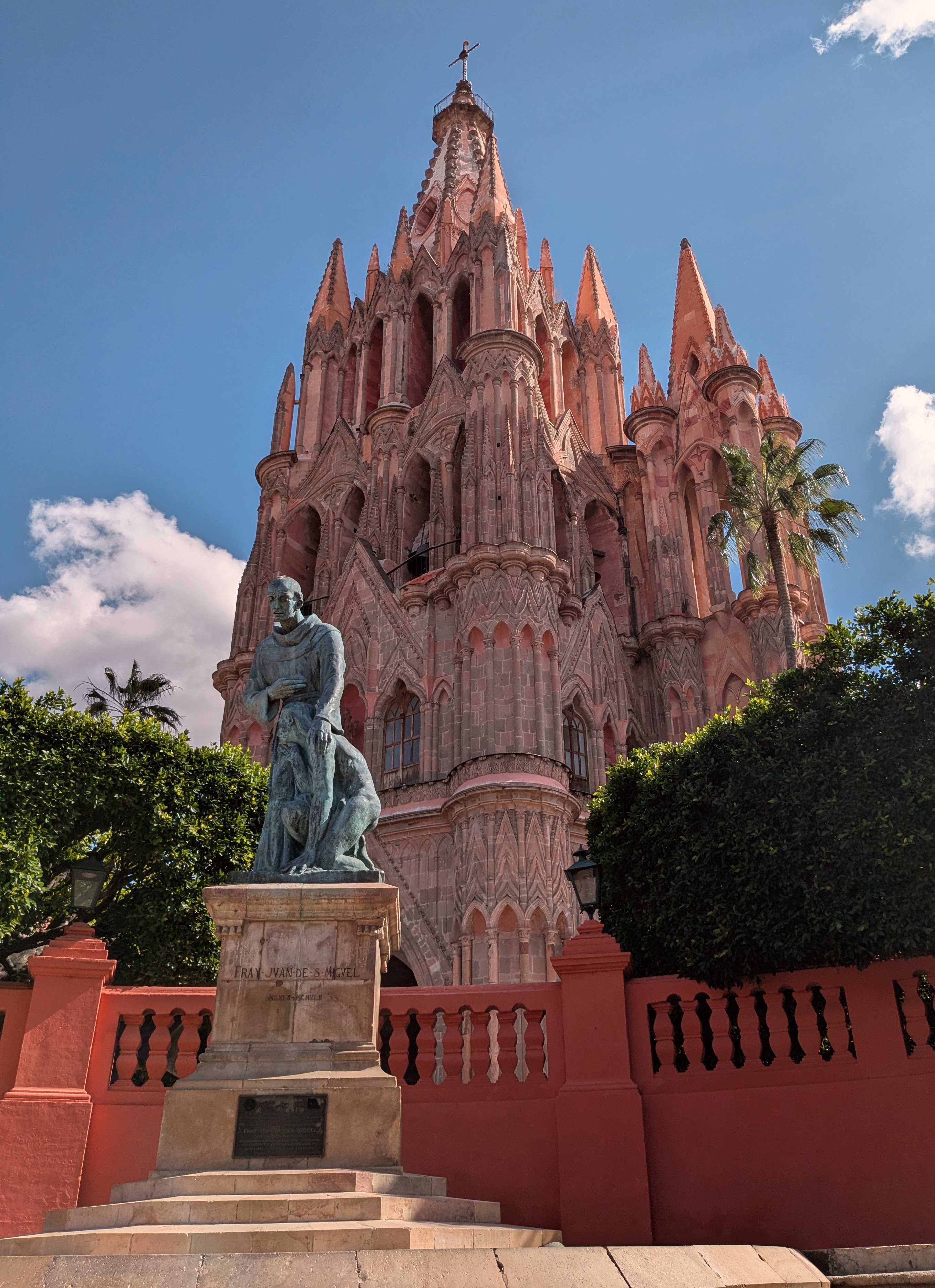
The obligatory and unremarkable stop at a jewelry store was next, and then after a brief stop at the unique San Cayetano Cathedral in the town of La Valenciana, we were on to the mines. Mining was the major reason for the growth and prosperity of the region. Up to two thirds of the wealth from the entire extent of Spanish colonization in the Americas came from this area. At Boca Mina we descended to a decent, though not heroic, depth. In other drops of the shaft the mine is still productive, but we didn’t get to see any of that part. The tour guide described the plight of the natives who were exploited as slaves for a few generations before Mexico effected its separation from Spain.
That night we had dinner at Comedor Tradicional. Excellent! We shared a crepe with huitlacoche, and perfectly medium rare medallions of flank steak with mole and plantain purée paired with a delicious Mezcal cocktail.
Thursday, November 27th
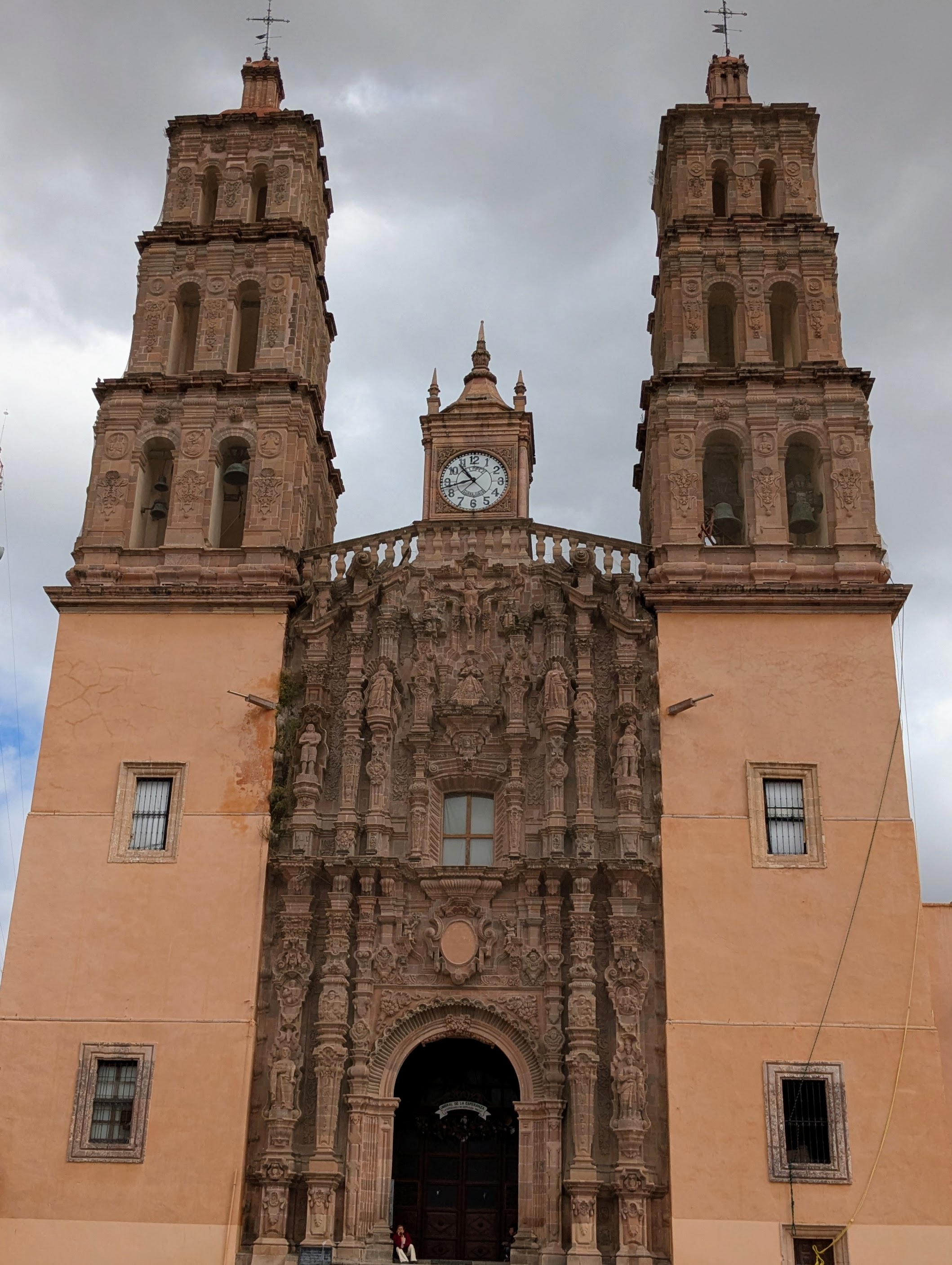
Our guide arrived and we headed out to Dolores Hidalgo. Our first stop was at a cemetery to see the elaborate tomb of José Alfredo Jiménez, a giant of Mexican Ranchera Music. We then checked out the main cathedral where Miguel Hidalgo's cry for freedom or "grito" first called for Mexico's independence, and then headed to the town plaza for a paleta (ice pop), and a history lesson from our guide. Up the street from there we toured the Museum of Independence which covers the life story of Miguel Hidalgo as well as the evolution of Mexican symbology including the anthem and the iconic image of the eagle eating a snake on a cactus.
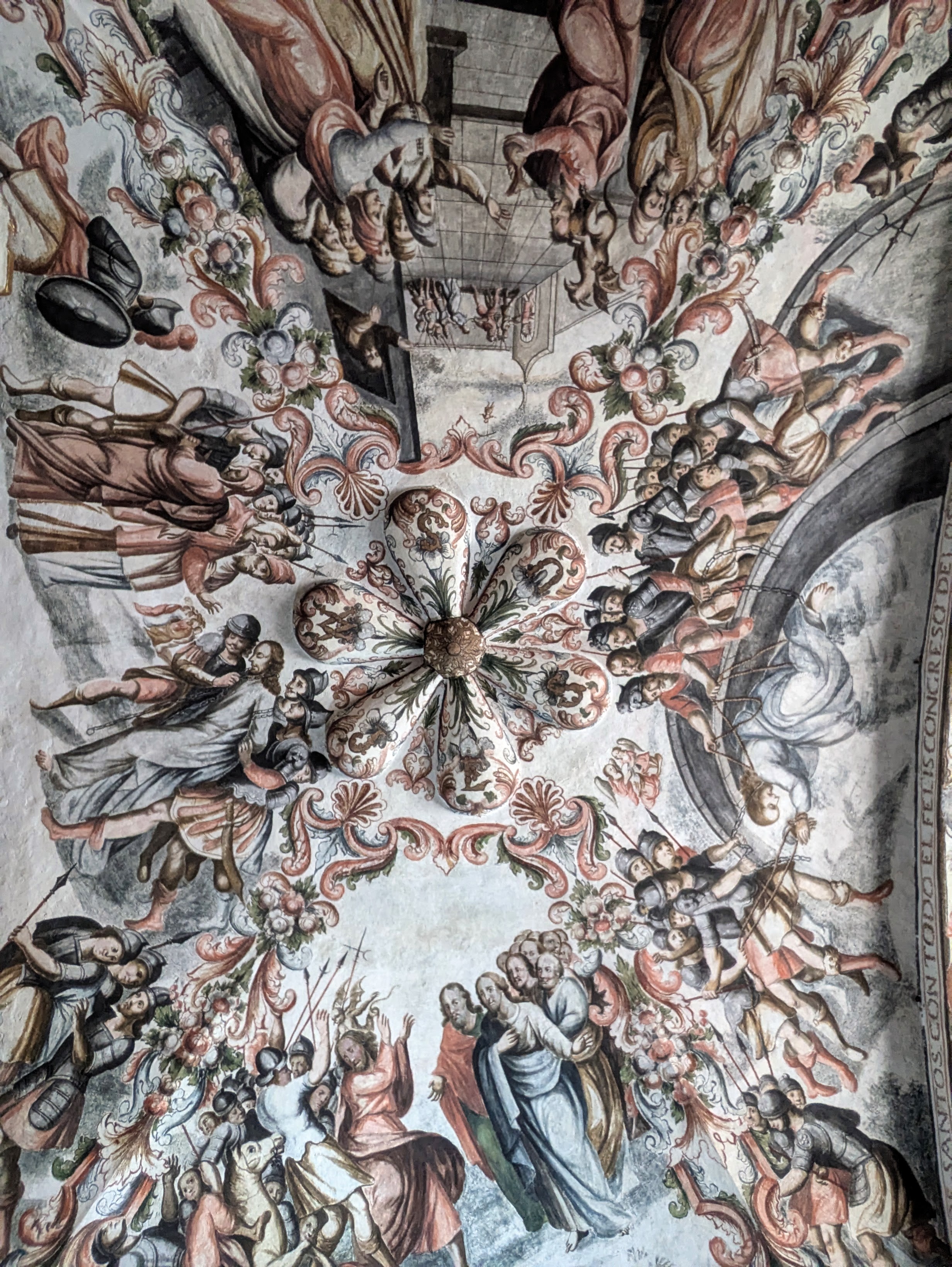
Afterwards we went to the childhood home museum of José Alfredo Jiménez whose grave we had stopped by earlier. It was far more elaborate and built up than the museum dedicated to Mexican Independence-- priorities, am I right? Next we went to the 18th century Sanctuary in Atotonilco that has some impressive frescoes on the ceiling which some refer to as the Sistine Chapel of the Americas. According to Wikipedia, the style is Mexican Baroque, but you can see native influence especially with respect to the use of color which matches the tinctures you see in the Aztec Codex.
We were given a couple of hours to check out the city of San Miguel de Allende on our own accord. We walked up to La Parroquia de San Miguel Arcángel, and reviewed the interior, then found a place for lunch in a nice patio. We went to the House of Allende museum to learn more about another influential founding father. Walking around the area you see lots of patios with galleries, and a fair amount of local artisanal shops selling rugs, leather, silver, carvings, and more. We walked down Aldama street to the expansive Benito Juarez park, then strolled around the park for a bit before going back up the street. Lots of real estate agencies in the area are pushing forward the inevitable gentrification and cost prohibition for the locals we see all over the world now. We popped into some stores, and then to get a coffee before meeting back up with our driver, Mario who dropped us off right next to our hotel.
Friday, November 28th
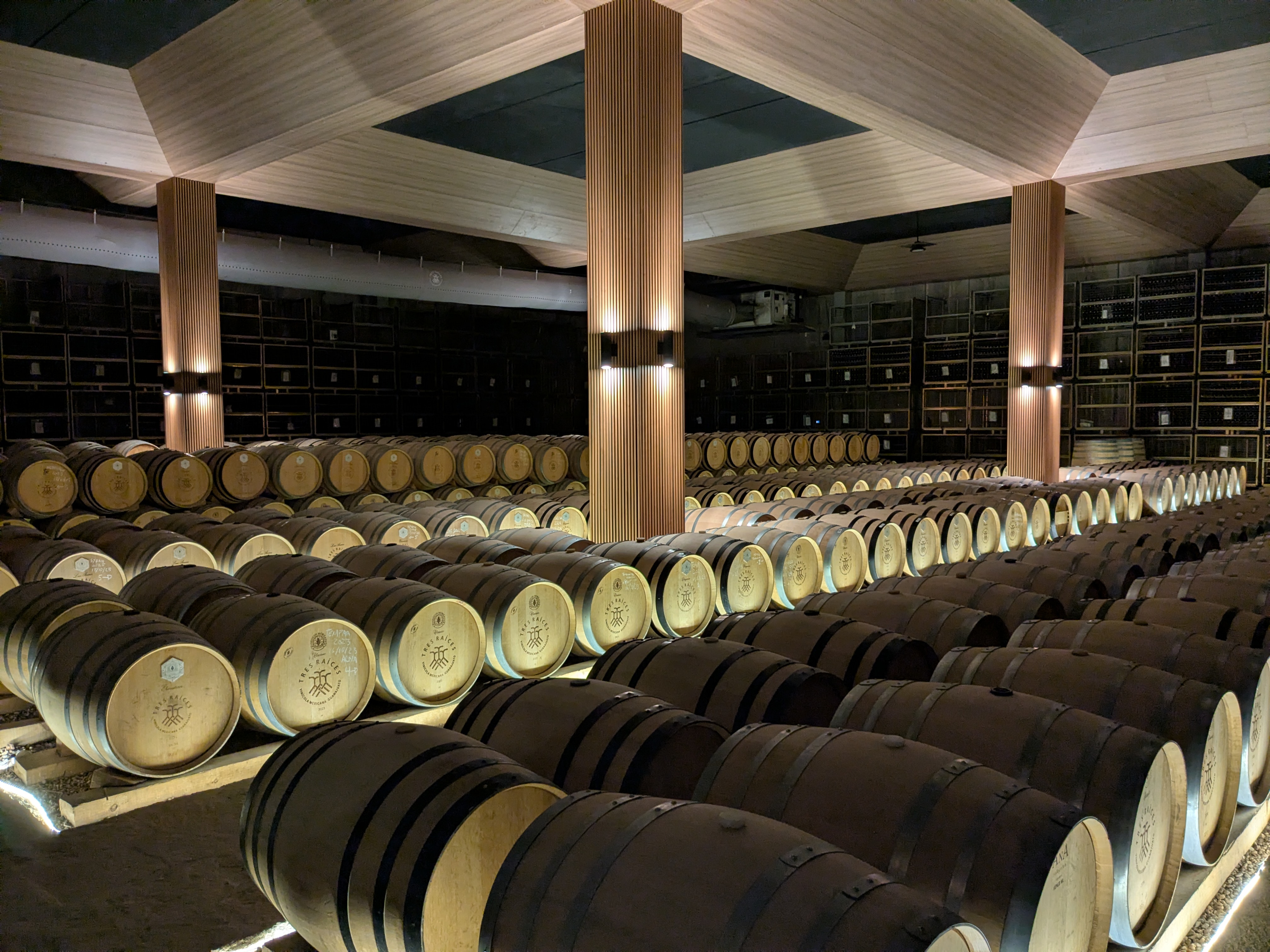
Our driver arrived at nine, and drove us up to the Tres Raices Vineyard between Dolores Hidalgo and San Miguel De Allende. It was the same road we had traversed the day before, but it was foggy this time up lending an eerie surrealism to the hillside. We arrived at the vineyard a bit early. It was quite an impressive location. The entry way was an elaborate wooden door that had been hand-crafted in India many years ago. Our guide showed as around the vine rows, and talked about the compost spot before taking us to the fermentation tanks, and showing us the cellar. She then brought us back to the tasting area in the restaurant where we had started our tour. We tried a Cabernet Sauvignon, a Rosé, Pinot Noir, Sangiovese, and a Cabernet Franc which paired nicely with a charcuterie board of grapes, various local cheeses, a local honey, and a tomatillo marmalade. They didn't have to ask us twice if we wanted to stick around for lunch. We shared osso bucco with asado beef tucked in the bone hollow, and crunchy croquettes with cheese and pork, and of course a couple more glasses of wine to pair.
That evening we attended a classical music performance of Brahams and Schubert in the opulent Teatro Juárez.
The building, with its remarkable arabesque interior dates back to the 1870s, construction having been completed during the reign of Porfirio Díaz, who seized power by coup, and installed himself as dictator until he was forcibly removed from power in 1911.
We spent our last night like we spent our first, meandering up the alleys to explore the hidden shops, cafes, and bars.