travel
Tikal
April 21, 2026 · 9 min read
Wednesday
After an early breakfast at the hotel, we hopped in the van for the short drive to the Belize / Guatemala border. There were lots of uniformed school students in the border checkpoint parking lot. Apparently there's an agreement between the countries to allow Guatemalan students to cross into Belize to learn English. We waited in line to get our Belizean disembarkation stamps and Guatemalan immigration stamps. Then we got on another shuttle bus with our driver, along with our guide, Levi, and proceeded to Tikal. Guatemala has some beautiful countryside, but the poverty is palpable everywhere you look. We passed half-built brick facades, and women out front cooking on comals. The same convenience store was replicated over and over again on the road side, filled with plastic soda bottles and processed snack foods bereft of nutrition. Behind the simple brick shelters you could see the hammocks where the families slept. A lot of the open land has been cleared for cattle grazing.
Safety was hardly a concern. The highway is not well maintained, and so we were constantly swerving to avoid pot holes. Most people traveling on the highway did so on cheap motor bikes or scooters, and helmets were almost nowhere to be seen. We saw a lot of children sitting in front of their parents, holding on to the handlebars. One woman sped by us on a motor bike with her baby in a sling hanging off her hip!
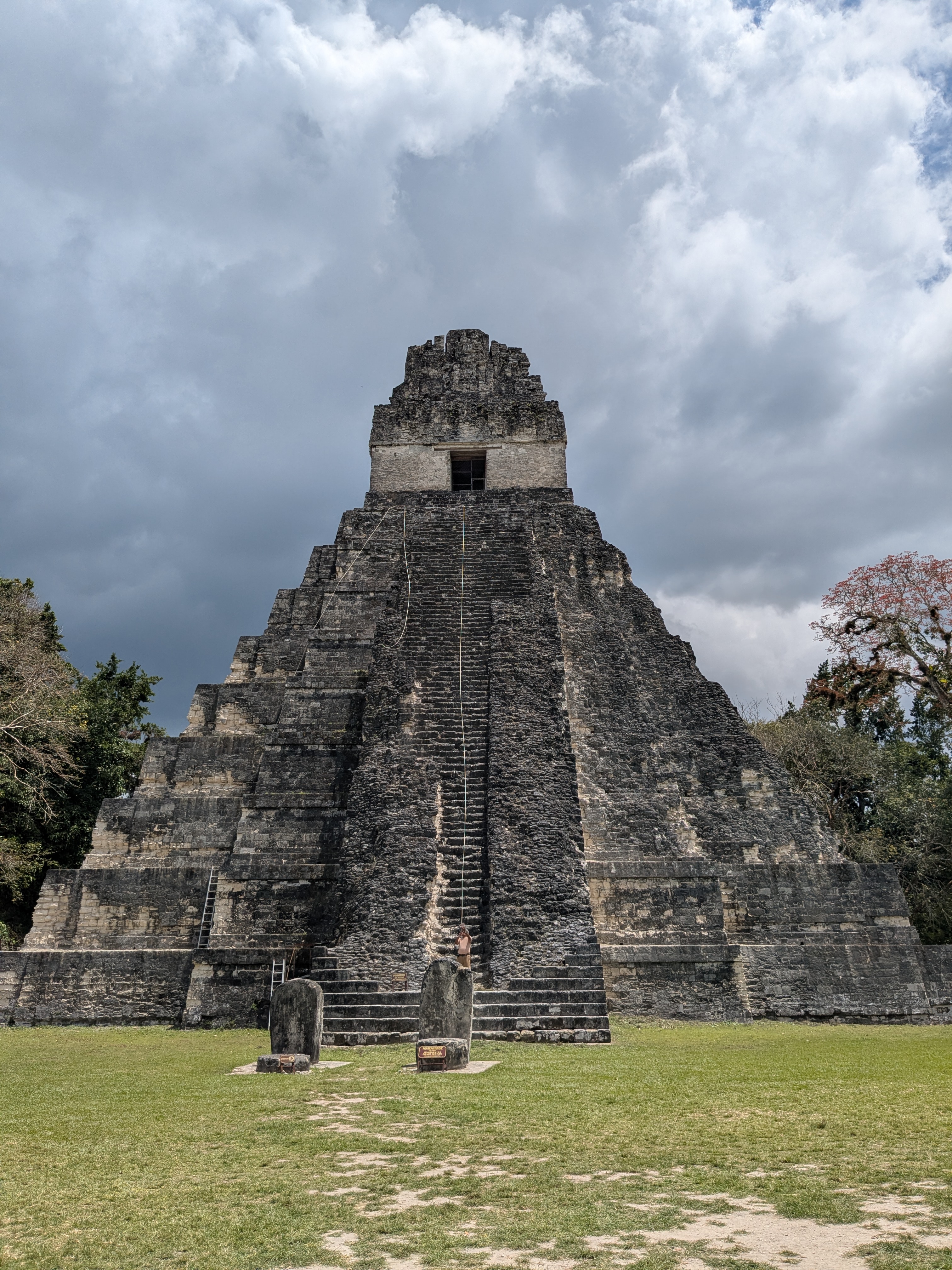
At the national park that encompasses Tikal, we got out of the shuttle van and proceeded up the trail to the entrance, got our wrist bands and saw our first glimpses of the marvelous stone ruins. Levi pointed out the false arch construction for the living quarters inhabited by nobles at the main temple complex. Temple 1 (Temple of the Jaguar) is one of the most impressive ancient world structures I have ever seen. I imagined what this must have looked like in its heyday, where the building would have been covered in stucco and painted red. Levi showed us the quarries where they pulled the limestone out of the ground to build the city infrastructure. The massive holes were then converted into reservoirs for the city's water supply. The temple complex of the acropolis was configured such that the water dripping off the buildings would roll down the stucco sides and into the reservoir.
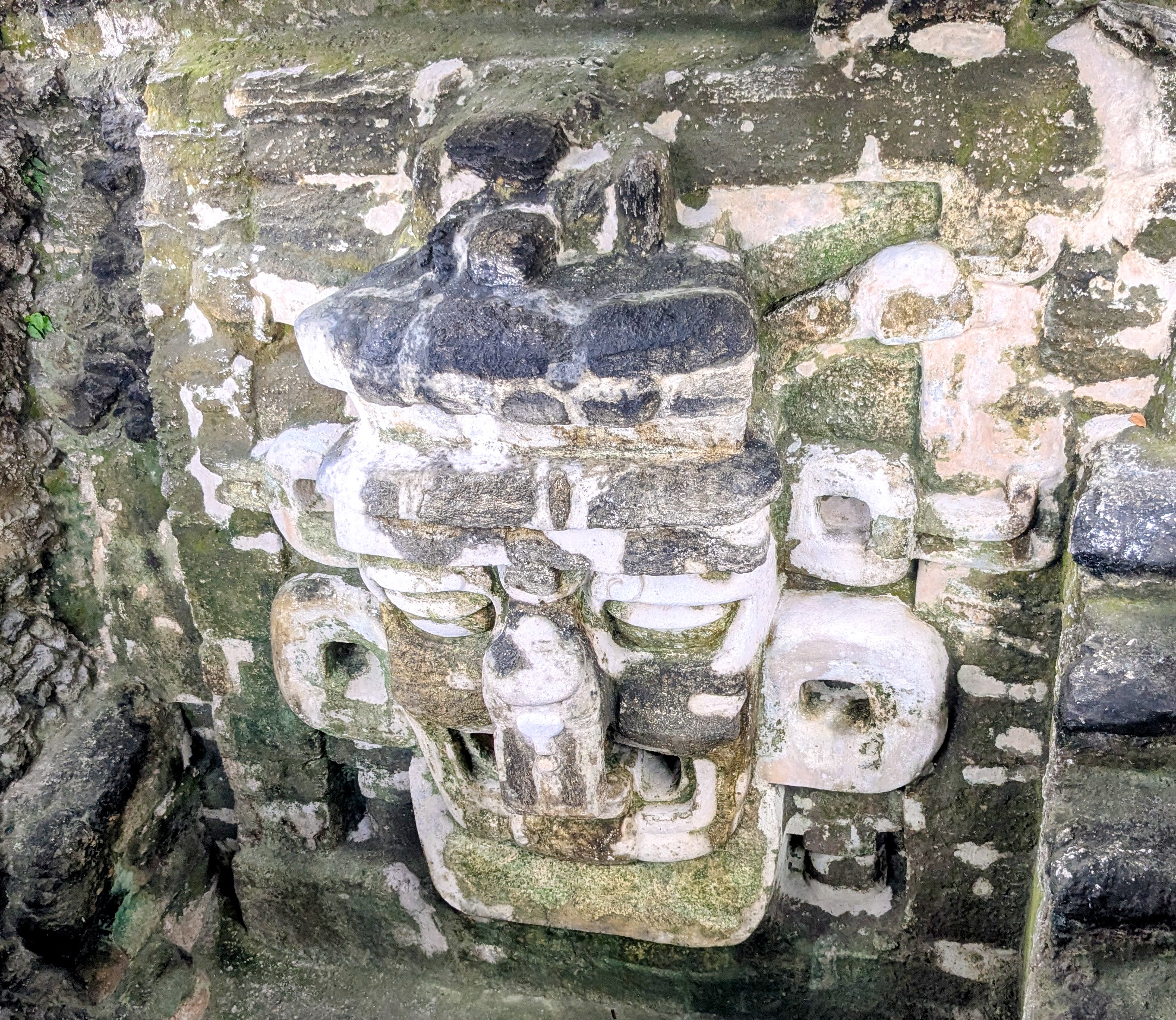
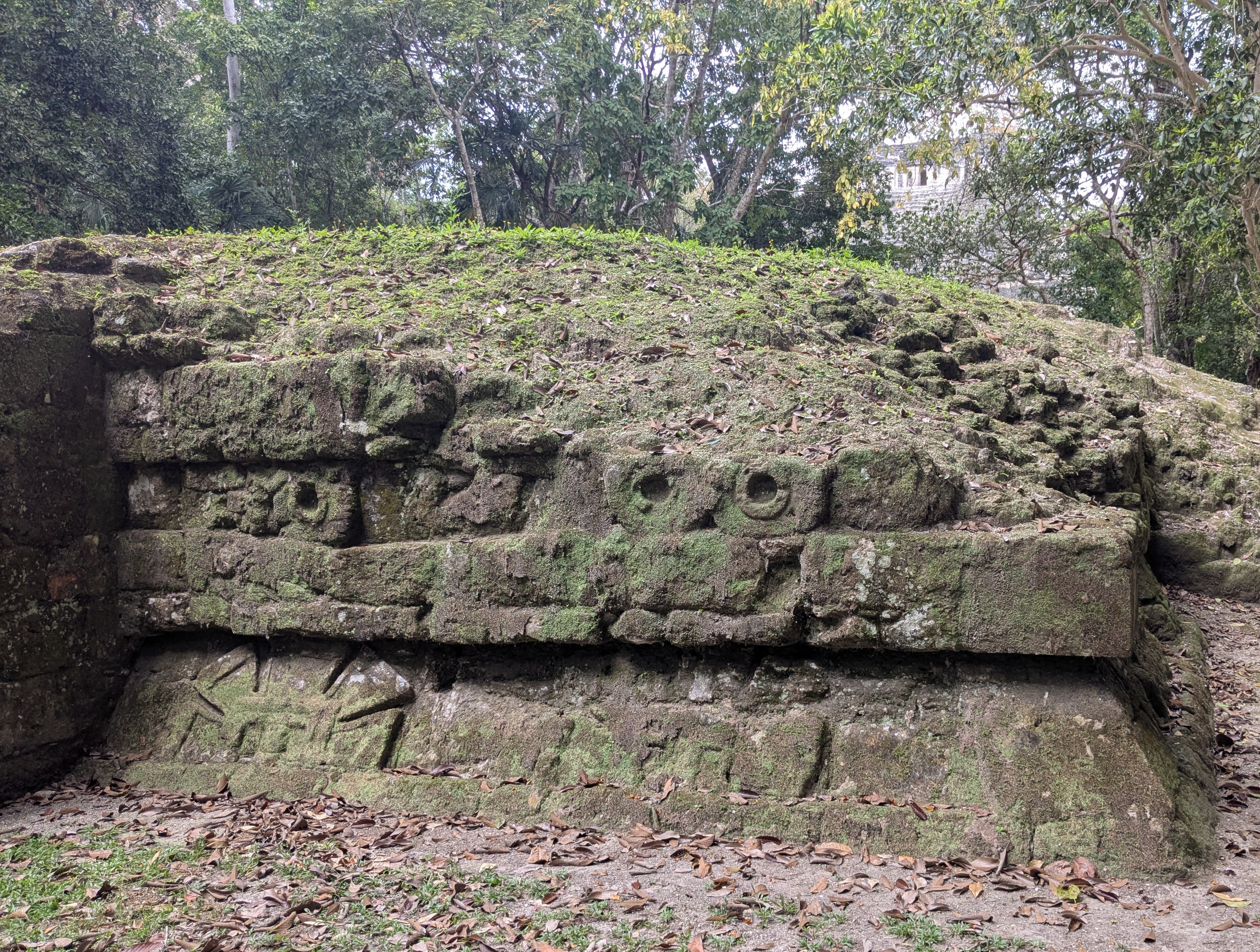
I walked up the steep steps on the north temple to view the surrounding area and explore the interior rooms. Then I went over to the adjacent acropolis to view the stele out front, but it was hard to make out what had been etched into the stone from the centuries of erosion. The more intact structures are in the museum in Guatemala City. However, a very impressive stone mask of Chaac, the God of Rain, is visible on one of the raised platforms in the northern acropolis.
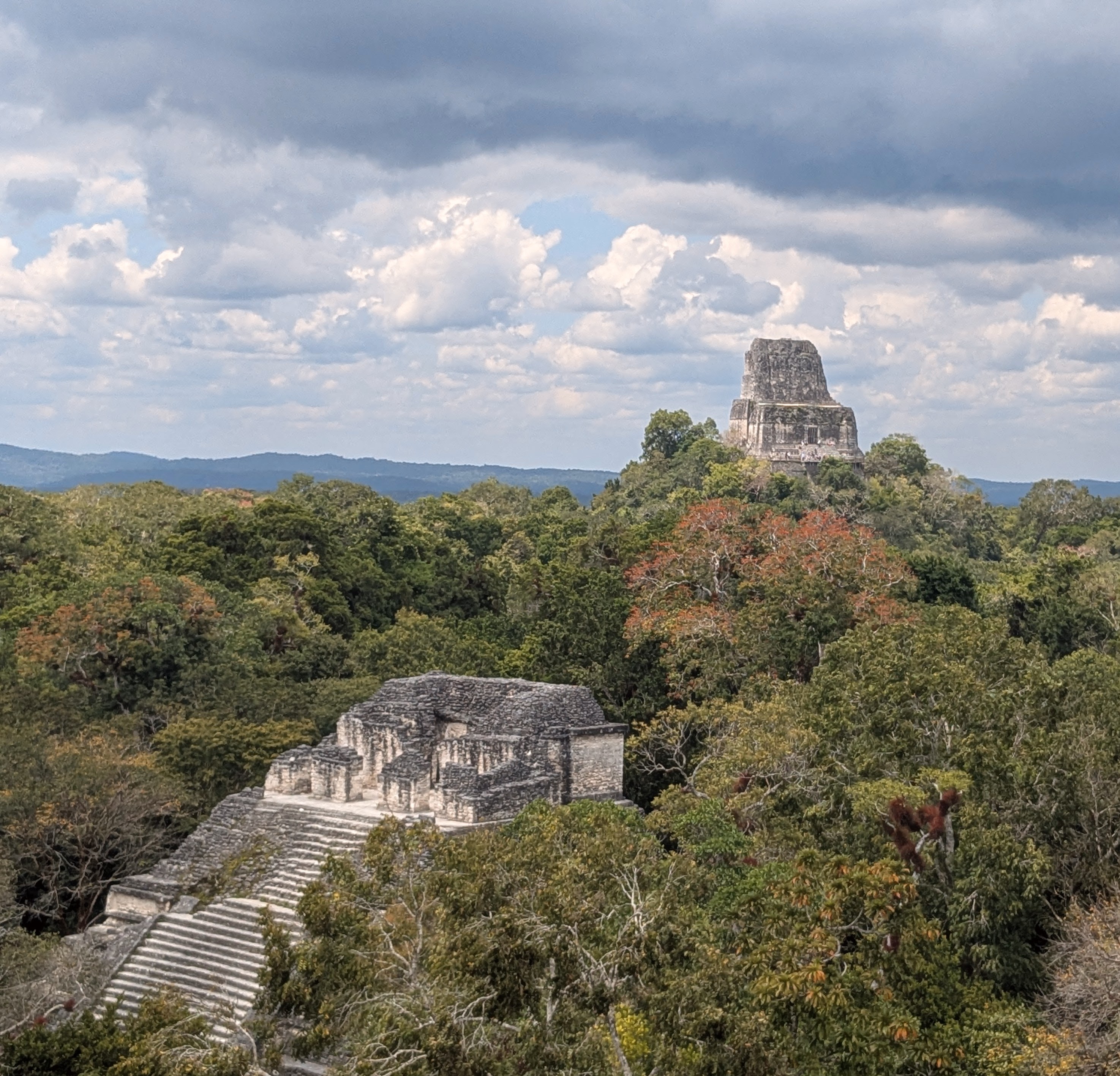
I climbed up the steps to take in the view from Temple II, again trying to imagine the colors and symbols that would have adorned the heavy stone temple crest. There was an impressive amount of wildlife visible on our tour as well. We saw a Moctezuma Oropendola, which had one of the craziest sounding bird calls I'd ever heard. There was also a spider monkey, coatimundis scurrying about, a parrot, and couple of toucans. Levi showed us a video on his phone from a few months back in the exact same spot we were standing where a jaguar had come out of the jungle and grabbed an unalert coatimundi.
Though we had been walking around the various temple complexes for half the day, Levi informed us that our tour only encompasses about eight percent of the site! We passed by the Mundo Perdido which was a celestial stargazing complex where the main pyramid has no crowning temple, but just a flat platform for viewing. From its apex you are able to see the sun rising or setting above a couple of other structures in the distance that align perfectly during the solstices and equinoxes. The Maya were exacting in the understanding of the passage of time, which they mark in several separate calendars. For short term measurement, there is the 260 day cycle (equivalent to the human gestation period of nine months), and a Julian style 360 day calendar (with the remaining five days considered to be bad omens). For considering longer passages of time, these two calendars are roughly combined in 52 year cycles that are known to scholars as a Calendar Round. And finally, to measure cycles of time longer than that, there's the Long Count from which they made calculations based on the year 3114 BC-- the mythical beginning of the Maya universe.
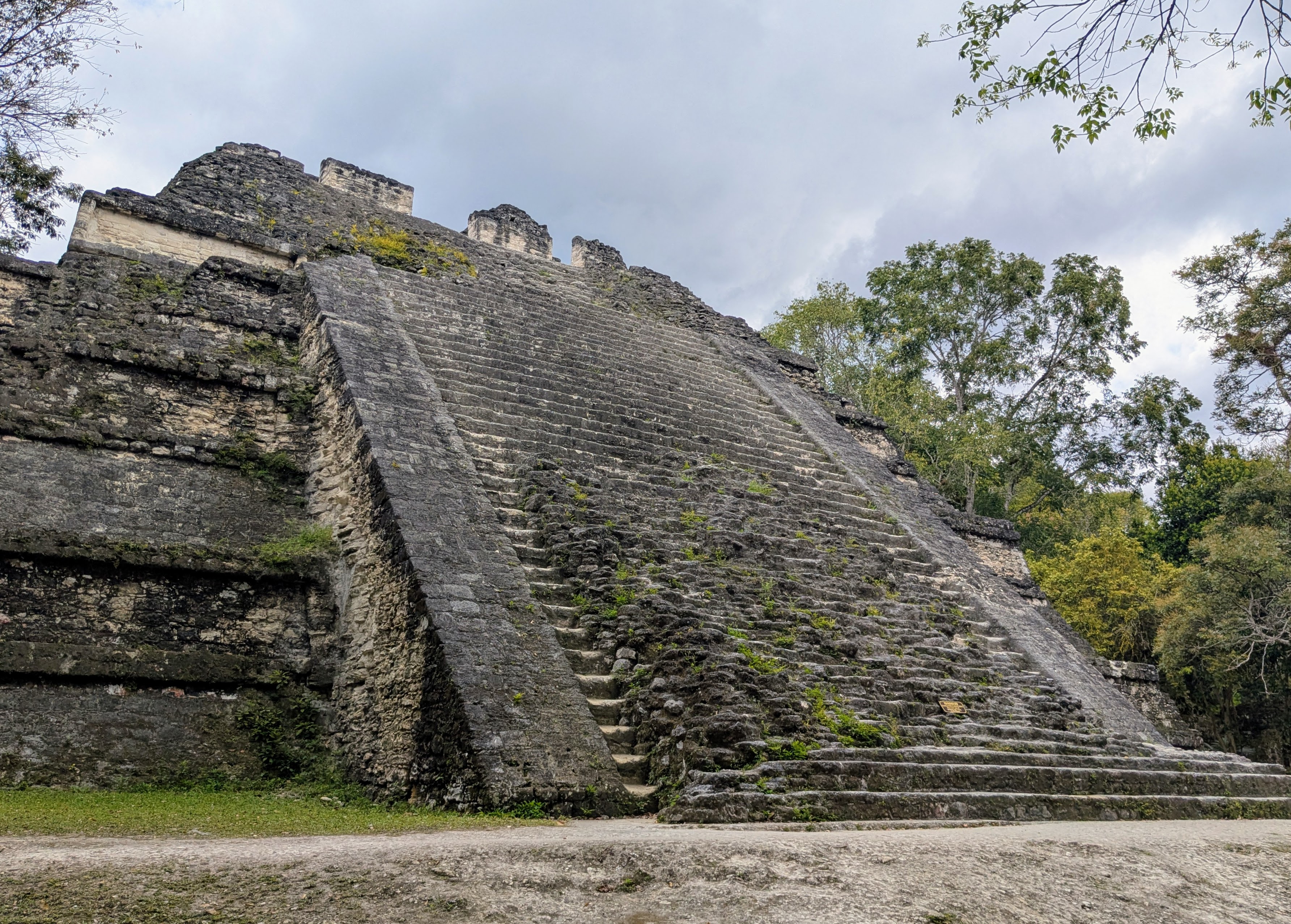
After getting another quad workout on the steps surrounding Temple IV, I tried to imagine the time it must have taken to build all of these using just stone tools, and no beasts of burden. Unlike Egyptian pyramids, which were purpose-built as tombs, it was usually only after construction that a tomb may have been expanded at the base of the pyramid to inter a great king. On the way out Levi showed us a temple complex where you could witness the influence of the Aztec city of Teotihuacan, which came from the Late Classic period.
When we got back to the hotel in Belize, I insisted on walking back down the hill to try one of the restaurants in town because I didn't want to be a lame-o who only eats his meals at the hotel restaurant. It was a great decision as we found an excellent place, Koh-Ox-Han-Nah, Mayan for Let's Go Eat, where I had a beef curry and a couple of beers.
Continue to San Pedro