travel
Guanajuato, México
November 30, 2025 · 10 min read
Monday, November 24th
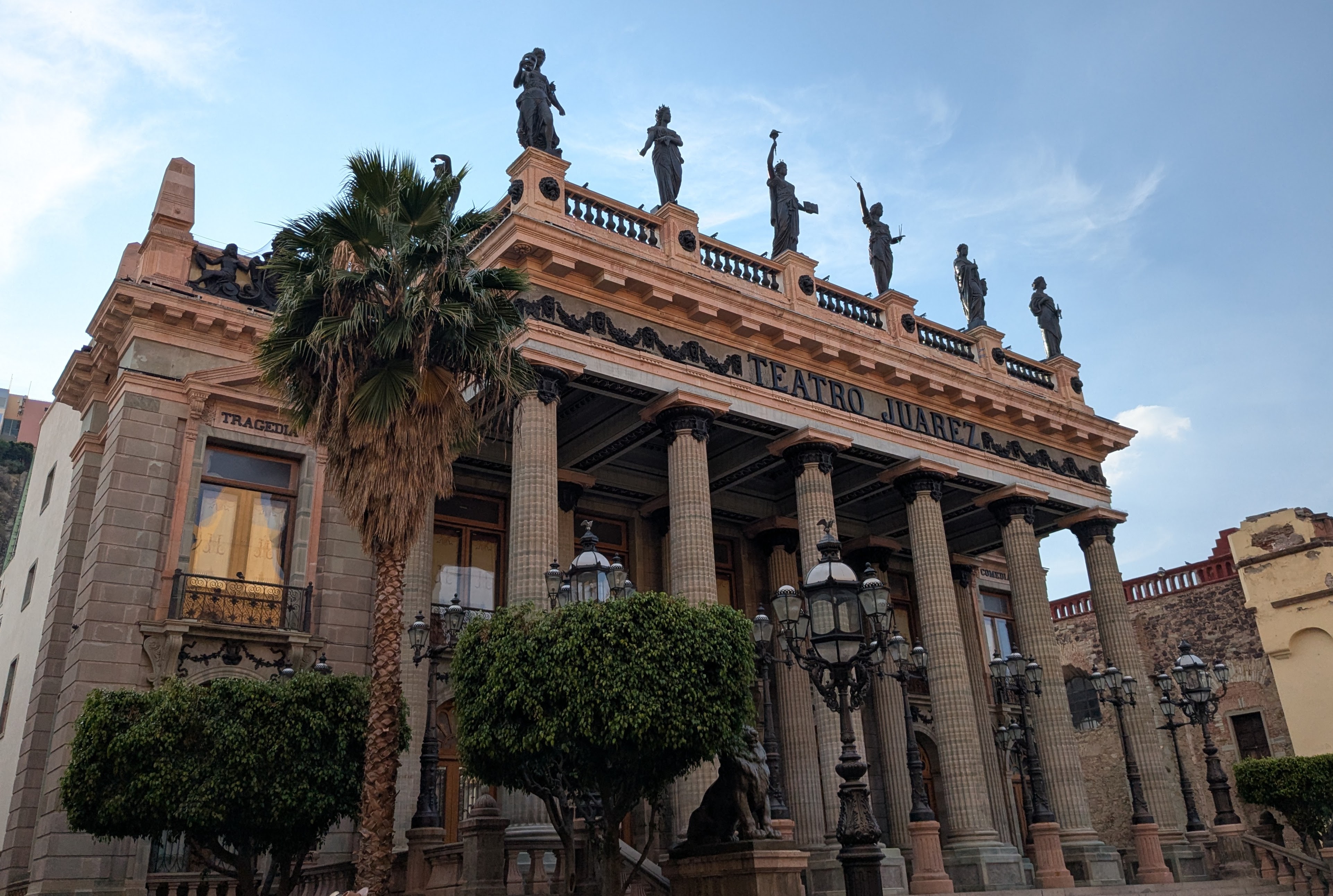
My first impression of Guanajuato as we rode the hotel shuttle in from the airport was surprise at just how labyrinthine the tunnels are running underneath the city. As this removes the car traffic from the city center, it makes for an extremely walkable urban experience. As you walk the stone streets away from the impressive Teatro Juárez and Plaza de la Paz, you appreciate quickly how small the valley is within which the city is located. The alleys, or callejónes as they're known locally, start to wind and escalate, rapidly revealing interesting restaurants, cafes, and shops around every curve. Each evening we went out, I was endlessly curious to see where they led.
Tuesday, November 25th
After breakfast, we proceeded to do the walking tour I had mapped out on my phone. First we stopped at the Museo Casa Diego Rivera. Though he didn't live here for very long, Guanajuato was his childhood home, and this museum is right where he grew up. Displayed were several of his early works and lesser known sketches that trace the evolution of his style. There was also an intimate collection of letters and photographs between Frida Kahlo and some of her closest friends.
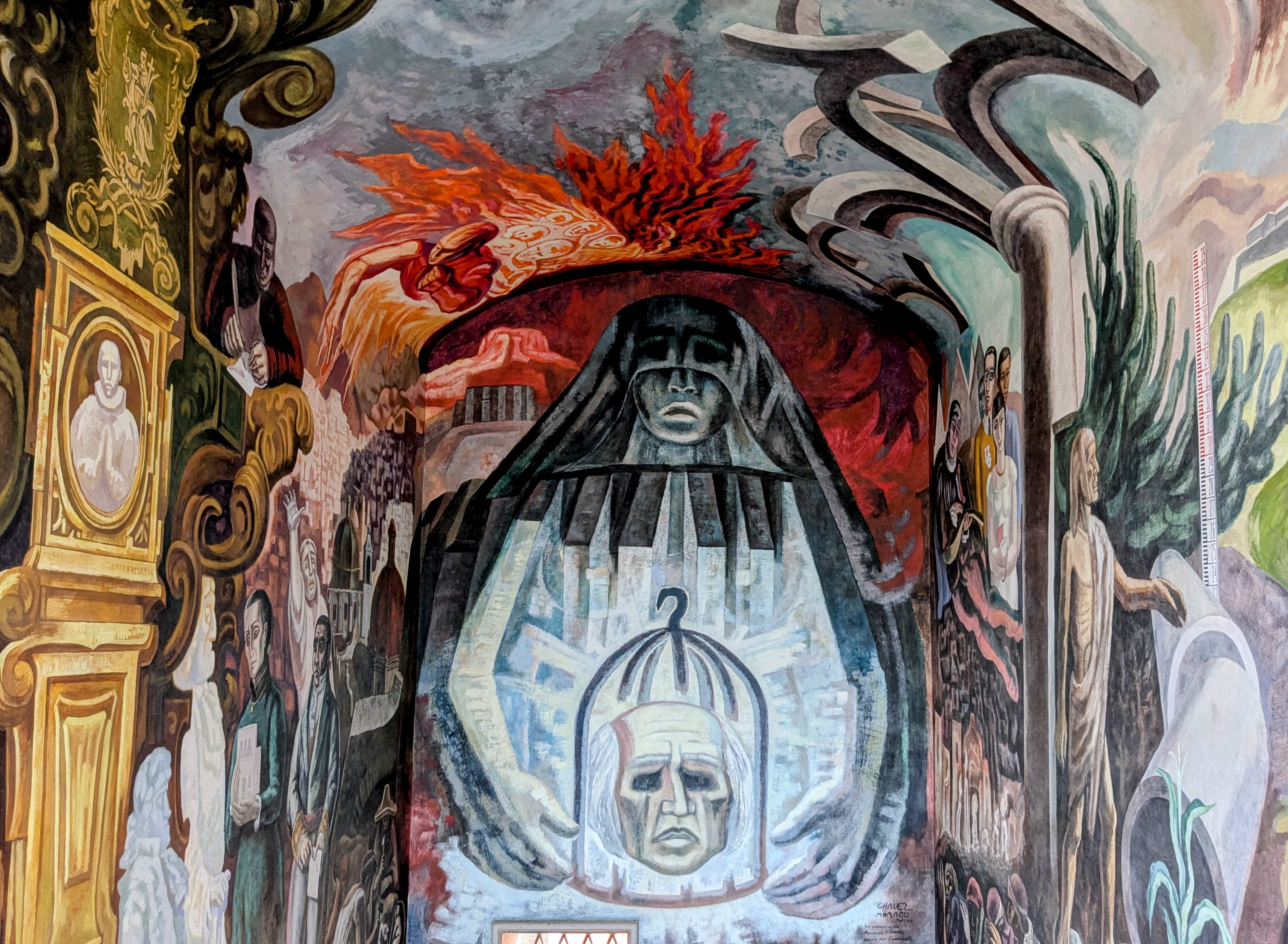
The next stop was The Alhóndiga de Granaditas-- the old Spanish granary that was overtaken by dissidents led by Miguel Hidalgo to mark the first battle in the Mexican War for Independence. On one of the sides of the courtyard, you walked into the enclosure and saw bronze heads in relief of Allende, Aldama, Guerrero, Morelos and Hidalgo. I didn’t recognize the significance at first, but then found out that Allende, Aldama, and Hidalgo were captured in the early years of the revolution, and their actual decapitated heads suspended in cages in that very building as a deterrent to any other would be revolutionaries. Brutal stuff!
There were lots of exhibitions marking the major moments leading up to the “grito” or cry for freedom from the Parrish Cathedral of the city of Dolores Hidalgo. Some pretty hard core murals graced the ceilings and walls. A replica of the church bell, the original now in Mexico City, is placed in the courtyard.
Next we went to check out the Hidalgo Market. Located in a Porfirio era building, there are stalls selling food and provisions on the first floor, and crafts on the second. After lunch we headed to the Callejón de Besos (Alley of the Kisses), a popular tourist spot in which it is customary to kiss on the third step where the walls of either side of the alley practically touch. As we passed by the impressive University of Guanajuato, a kind, elderly man in the entrance of the university museum on the opposite side of the street insisted on showing us around.
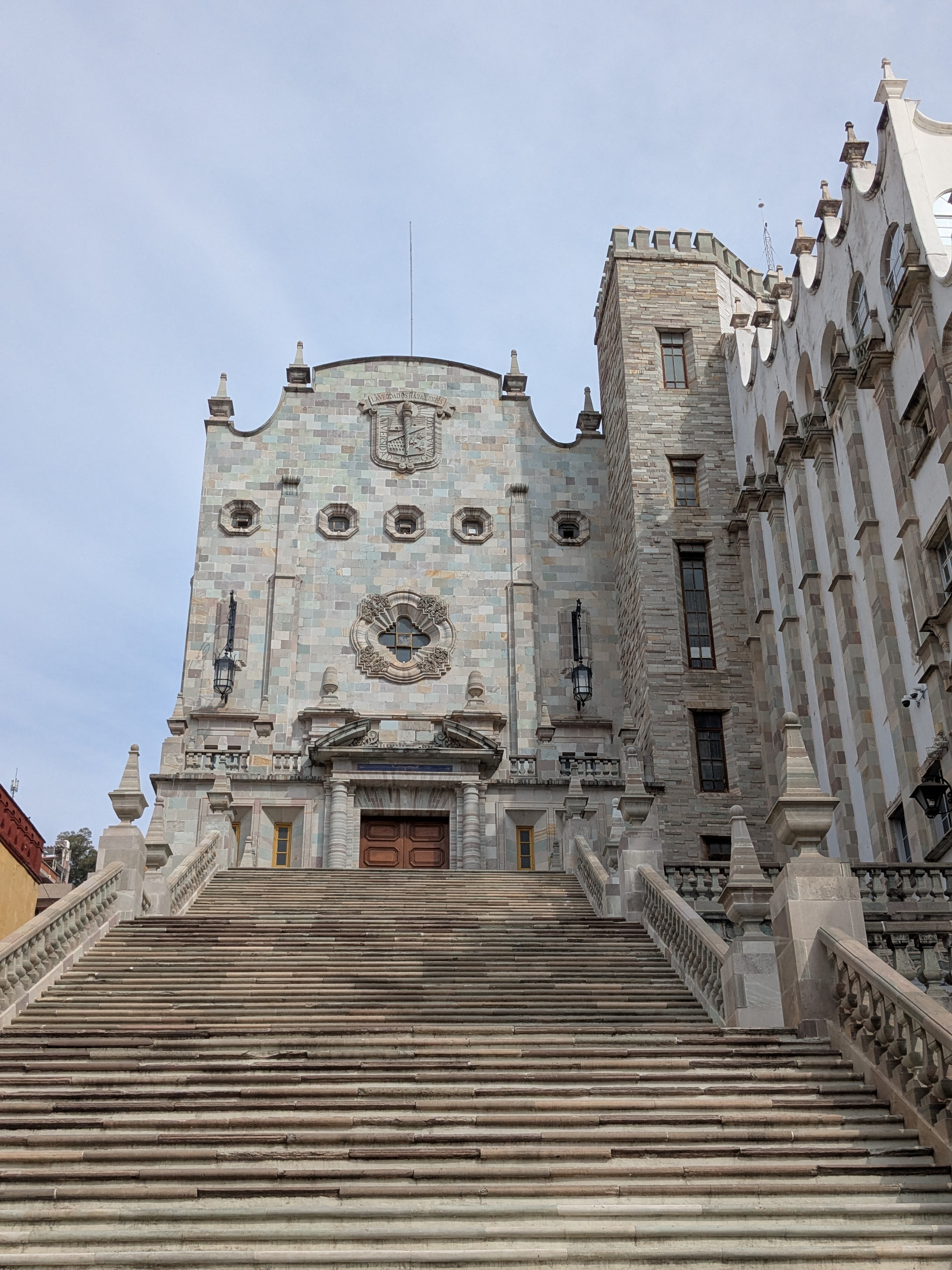
He talked about the original owners of the building that later became the museum, showed us the old kitchen and the rooftop, and invited us to attend either that night’s or the next night’s musical performance by local university students. We made it to the concert the next night and were not disappointed!
Another stop on the tour was the Museo Iconográfico del Quijote, where there is a mixture of different works inspired by the writings of Miguel Cervantes. There are renderings of brass, wood, oil on canvass, and other media depicting Sancho Panza, and the protagonist tilting with windmills. Images from the novel, Don Quixote are a fixture in Guanajuato as there is a yearly festival known as the Cervantino which attracts international artists, musicians, poets, and actors who create their own unique creative spins on the revered author's works.
Later that afternoon we took the funicular up to the Pípila statue that provided a wonderful panoramic of the city. The statue is dedicated to a hero of the revolution who is credited with wearing a stone on his back and ramming the door of the Alhóndiga, and lighting it on fire allowing for the soldiers to invade.
We finished the day with a nice dinner at one of the restaurants in front of Plaza de La Paz, and explored more callejónes.
Continue to Part 2